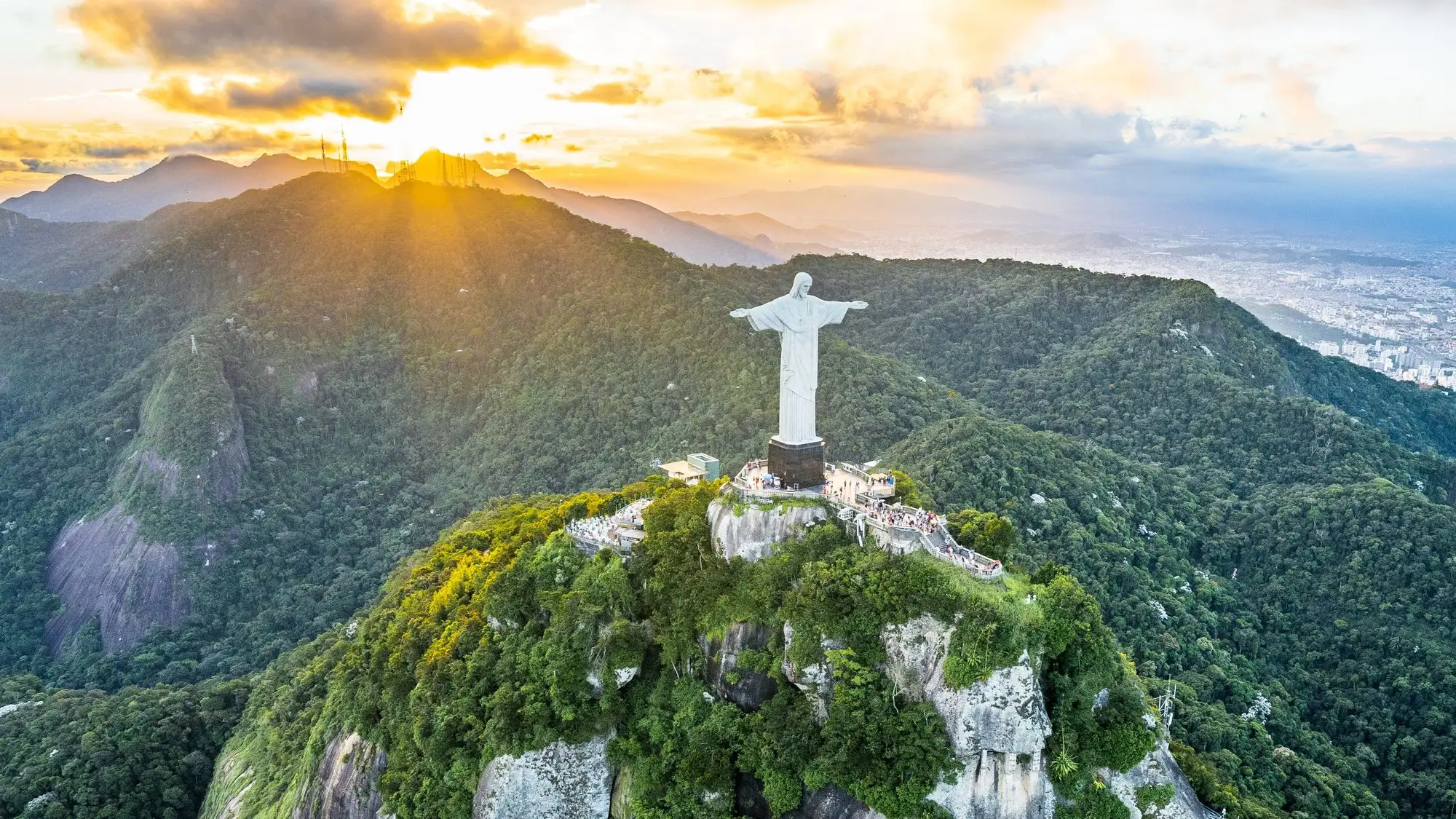
Christ the Redeemer stands on the 710-metre summit of Corcovado, inside Tijuca National Park, and nobody drives to it. You go up on the rack railway from Cosme Velho, in one of the park’s official vans, or on foot, and one ticket covers the ride and the monument.
Two things decide whether the trip is worth it. One is cloud, which can hide the statue and the city for hours, so look at the summit’s live camera before you leave. The other is the work on the escalators, which has halved the number of people allowed at the top at once and made the early slots harder to get.
Which ticket to buy, and what each includes, is on our Christ the Redeemer tickets page.
Highlights
Stand under the statue
30 metres of soapstone mosaic on an 8-metre pedestal, with arms 28 metres across.
Read the city from above
Sugarloaf, Guanabara Bay, the Maracanã, the Lagoa and the beaches, all from one terrace.
Ride the 1884 rack railway
3.8 kilometres through Atlantic forest, on a line older than the statue it serves.
Opening hours, getting there and access
Opening hours
The monument is open every day of the year. Trains leave Cosme Velho from 08:00 to 18:00, and the vans start and finish earlier in the city than they do at Paineiras.
Daily 08:00 to 19:00Train and van times side by side, and what the weather does to them: opening hours guide.
Getting there
Nothing at street level is near the statue, so “getting there” means getting to the train station or to a van. Both city van stops are a short walk from the metro. Cosme Velho station is not, and most people reach it by taxi or on the bus from Largo do Machado.
Where the ride up starts
Buses, metro stations, taxis and the step-free picture: how to get there.
Before you go
- Look at the live camera first. The van operator, Paineiras Corcovado, streams the summit live on YouTube, all day. How to use it is in our guide to the best times to visit
- Carry original photo ID for everyone, children included
- Check in early. The railway asks for 40 minutes before your train, and the vans for 15. Miss the train check-in and you board only if there is room
- Travel light. The train station has no left luggage, and the guided tours do not take large bags
- Dress for a mountain and a church. It is cooler and windier at 710 metres than on the beach, and swimwear is not allowed at the monument
- Leave the drone at the hotel. They are banned during visiting hours. So are climbing on the parapets and feeding the animals
- Guide dogs only. No other animals are allowed in the national park
Accessibility
- While the escalators are out, the route from the train platform is a lift and then about 80 stone steps. Without the lifts it is 220 steps in all
- Wheelchair users are taken up those steps on stair-climbing equipment, from the park’s visitor service centre on the second level. It takes about eight minutes up and six down, carries up to 150 kilograms, and fits standard wheelchairs only, so users of motorised chairs have to transfer
- The equipment is not used in rain or on a wet floor. If you cannot manage 80 steps, do not count on reaching the foot of the statue on a wet day. The lower terraces and the view are still open to you
- Lifts and adapted toilets are part of the railway’s own facilities
- Pushchairs must stay folded for the whole train ride
- Guided tours mostly list themselves as unsuitable for wheelchair users, so the train ticket is the better starting point
What to see and do
The top of Corcovado is small: a railway platform, a run of terraces and the statue on its pedestal. This is what to give your time to.
Look at the statue before you photograph it
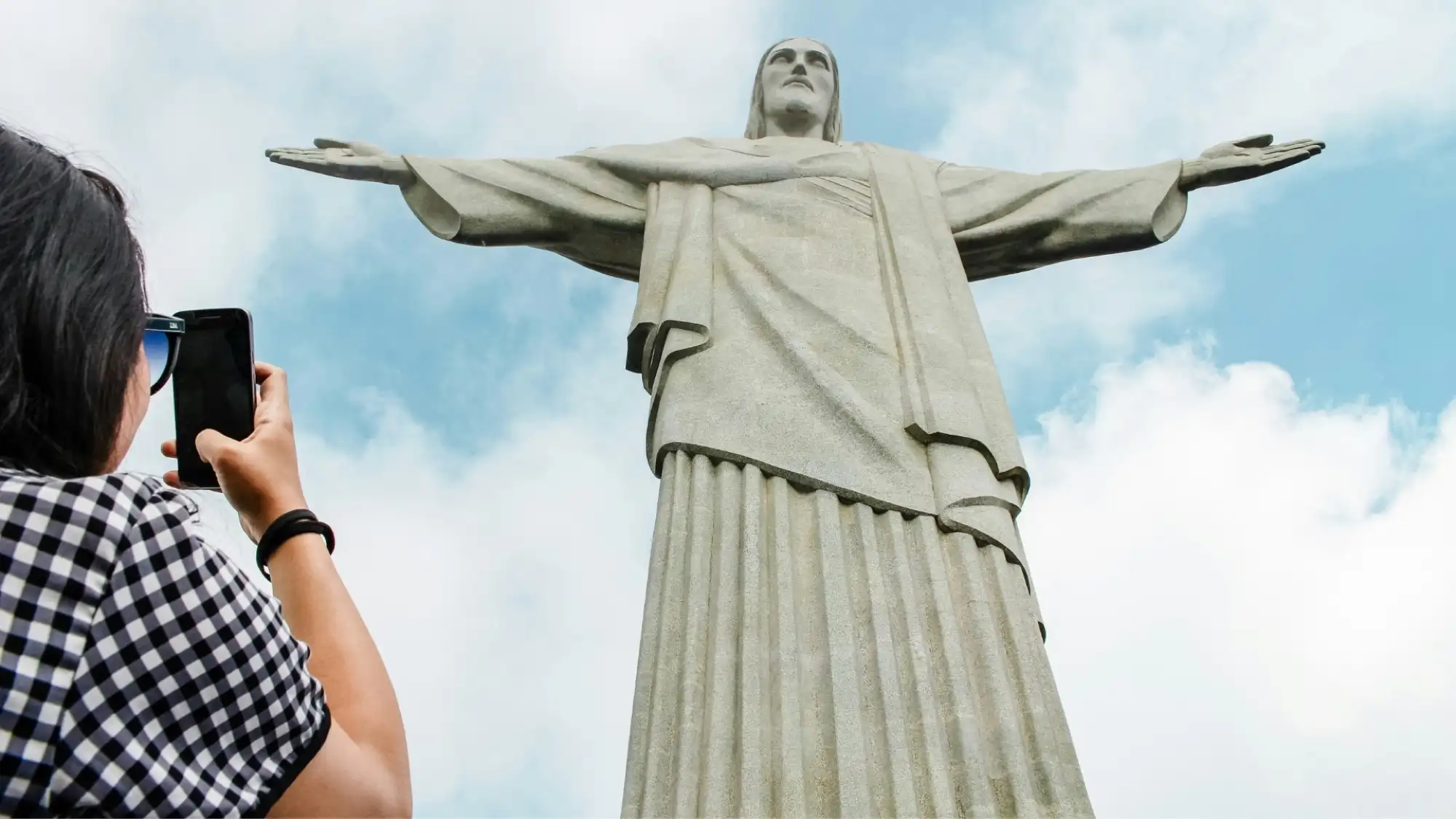
The figure is 30 metres tall on an 8-metre pedestal, which makes the whole monument about the height of a 13-storey building. It is reinforced concrete, and what looks like smooth stone from the city is a mosaic of thousands of small triangular soapstone tiles, each one laid by hand. Get close to the pedestal and look up at the folds of the robe to see them.
The head and the hands are the work of the French sculptor Paul Landowski, and they are the parts worth a long look. The face is calm rather than triumphant, and the hands are open. It is the largest Art Deco sculpture in the world, and the style shows most in those long, flat planes.
The statue faces east, so the face is lit in the morning and in shadow by late afternoon.
Walk the whole terrace for the view

Most people stop at the first railing, in front of the statue, where the view runs east over Botafogo to Sugarloaf and Guanabara Bay. Keep going round. To the south you look down on the Lagoa, with Ipanema and Copacabana behind it, and to the north you can pick out the oval of the Maracanã.
This is the reason to hold out for a clear day. The statue looks fine in mist. The city simply is not there. Haze builds through the afternoon, so mornings give the sharpest detail on the beaches and the bay.
Step into the chapel in the pedestal
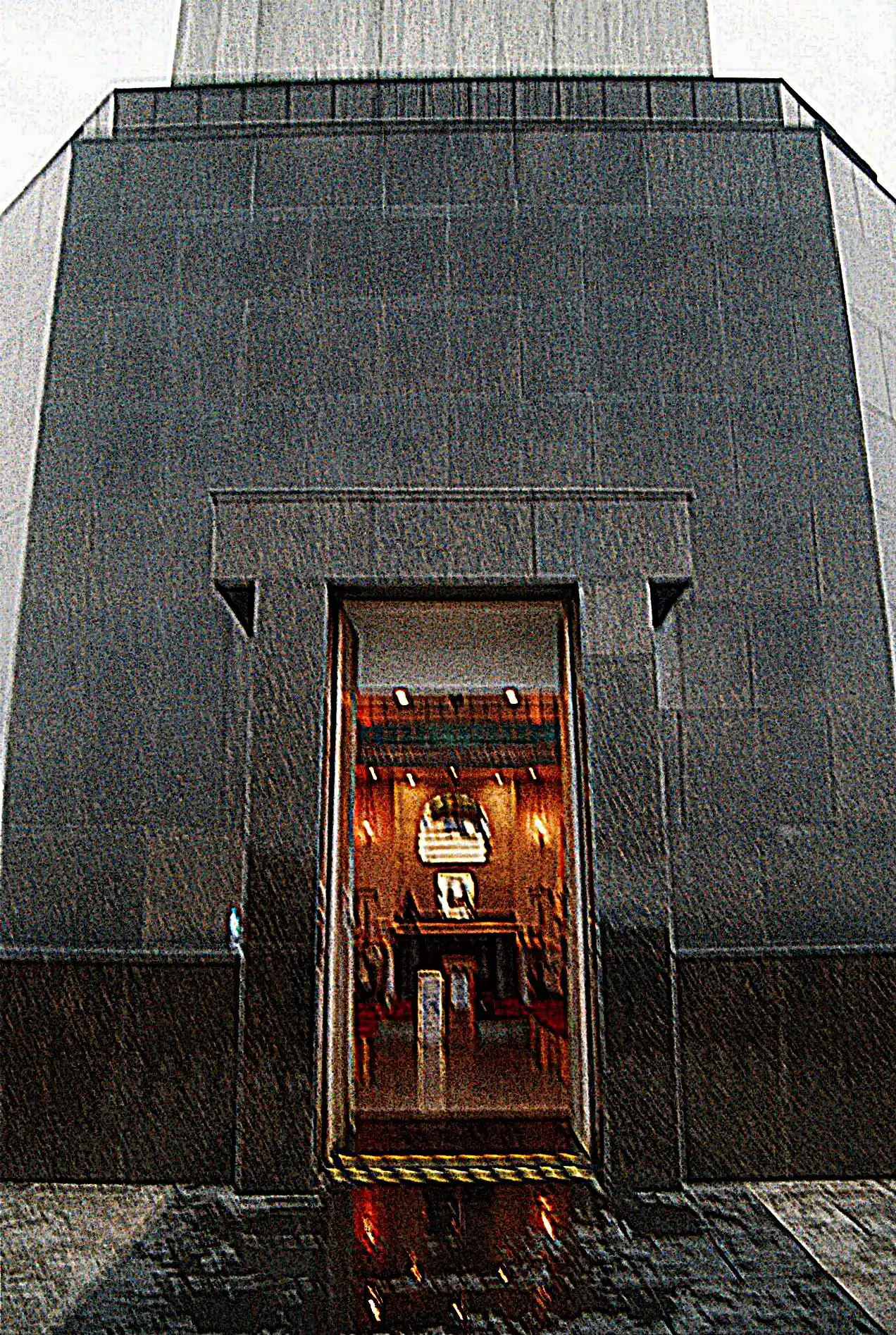
The pedestal holds a small chapel dedicated to Our Lady of Aparecida, the patron saint of Brazil, consecrated in 2006 for the statue’s 75th anniversary. This is a working Catholic sanctuary, not only a viewpoint. Mass is said every day at 11:00 and 15:00 (11:00 and 14:00 on Sundays), in the chapel or out on the esplanade when the weather allows, and baptisms and weddings are held here by arrangement.
Look for the two bronze busts placed for the 80th anniversary in 2011, of Heitor da Silva Costa, the engineer who designed and built the monument, and Cardinal Sebastião Leme, who blessed it. Most visitors walk past all of this. Five minutes is enough, and it is the one quiet corner at the top.
Treat the ride up as part of the visit
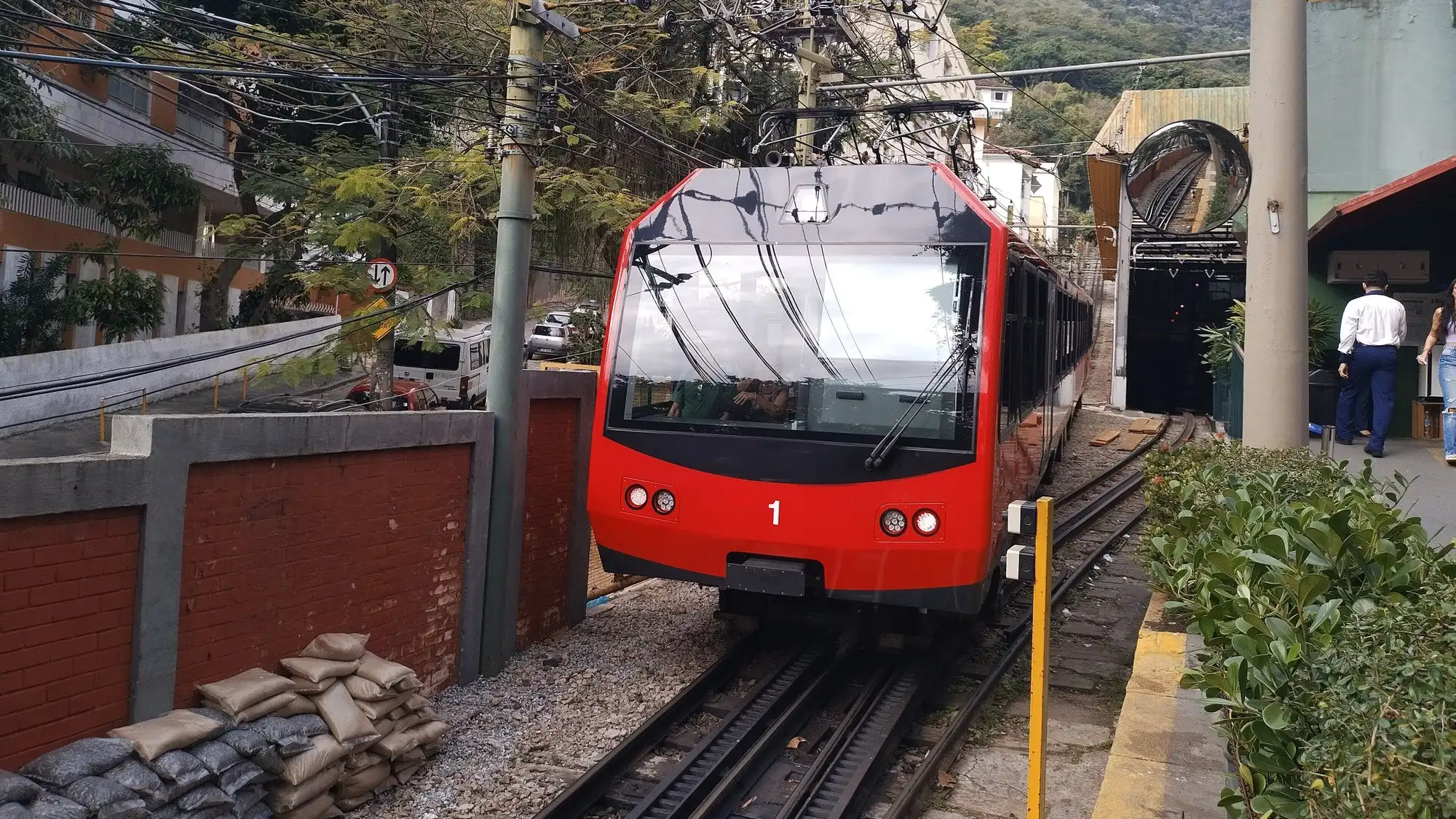
The Corcovado railway was opened by Emperor Pedro II in 1884, which makes it 47 years older than the statue, and it spent four of those years hauling the statue’s pieces up the mountain. It became the first electrified railway in Brazil in 1910. The line is 3.8 kilometres of rack railway through the Atlantic forest of Tijuca National Park, with the city appearing through gaps in the trees.
If you go up by van instead, you get the same forest from the road. Everything about tickets, check-in and the queue is in our Corcovado train guide.
Stop at the Paineiras Visitor Centre
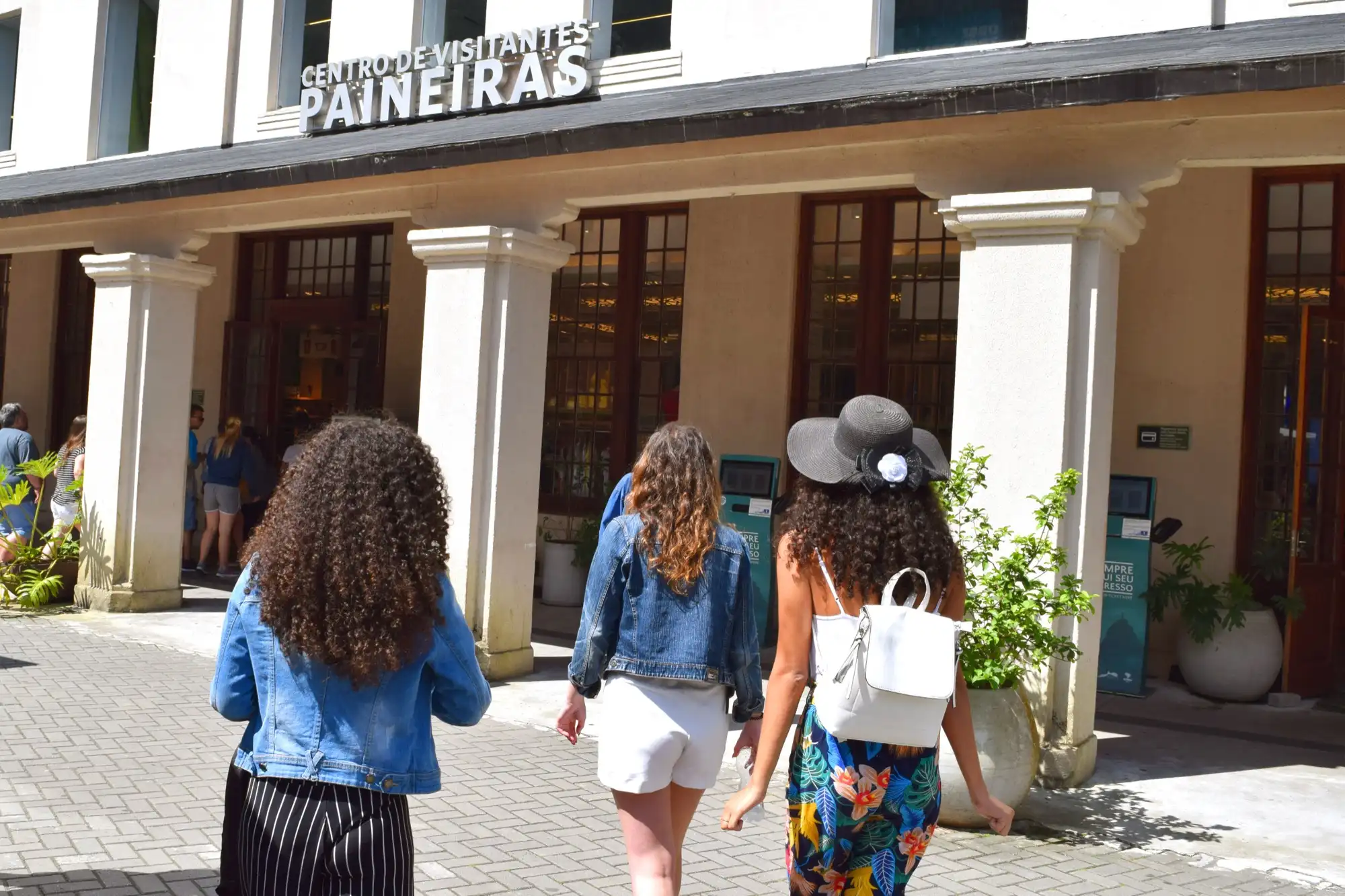
Every van stops here, 15 minutes below the summit. The building is the old Hotel Paineiras, opened in 1884 along with the railway and restored as the park’s visitor centre in 2016. It hosted two Brazilian presidents in its hotel days, and the 1962 Brazil squad, Pelé and Garrincha included.
Inside are a restaurant, snack bars, a souvenir shop and an interactive exhibition, Floresta Protetora, on the history of Tijuca National Park. A newer 1.15-kilometre trail climbs from here to the monument in about 45 minutes, passing a glass-walled lookout called the Mirante Cartão Postal. It is the natural place for a break on the way down.
Insider tips
Let the camera choose your day
From the beach Corcovado can look clear while the summit sits inside a cloud, and the other way round. Two minutes with the live feed over breakfast tells you more than any forecast. If the top is white, swap your day around and go to Sugarloaf, which is far lower and can be clear when Corcovado is not.
Train full? Look at the van
The train and the vans are sold separately, so when the railway shows nothing for your date, check the van ticket before you move your plans. The vans are efficient and less fun than the train, which is a fair trade for getting up at all.
Pick your crowd
Clear air belongs to the morning and so do the tour groups. The van operator itself recommends coming after 14:00, when there are fewer people at the top and the light is on Sugarloaf and the bay. If photographs of the statue’s face matter most, go early. If elbow room matters most, go late.
Give cloud ten minutes
Cloud at the top moves fast. A grey visit tends to go the same way, with nothing to see, then the whole statue for a minute or two, then nothing again. Have the camera ready and wait for the gap before you head back down.
Nearby attractions
Nothing is a short walk from a mountaintop. These are the places that pair naturally with a morning or an afternoon on Corcovado.
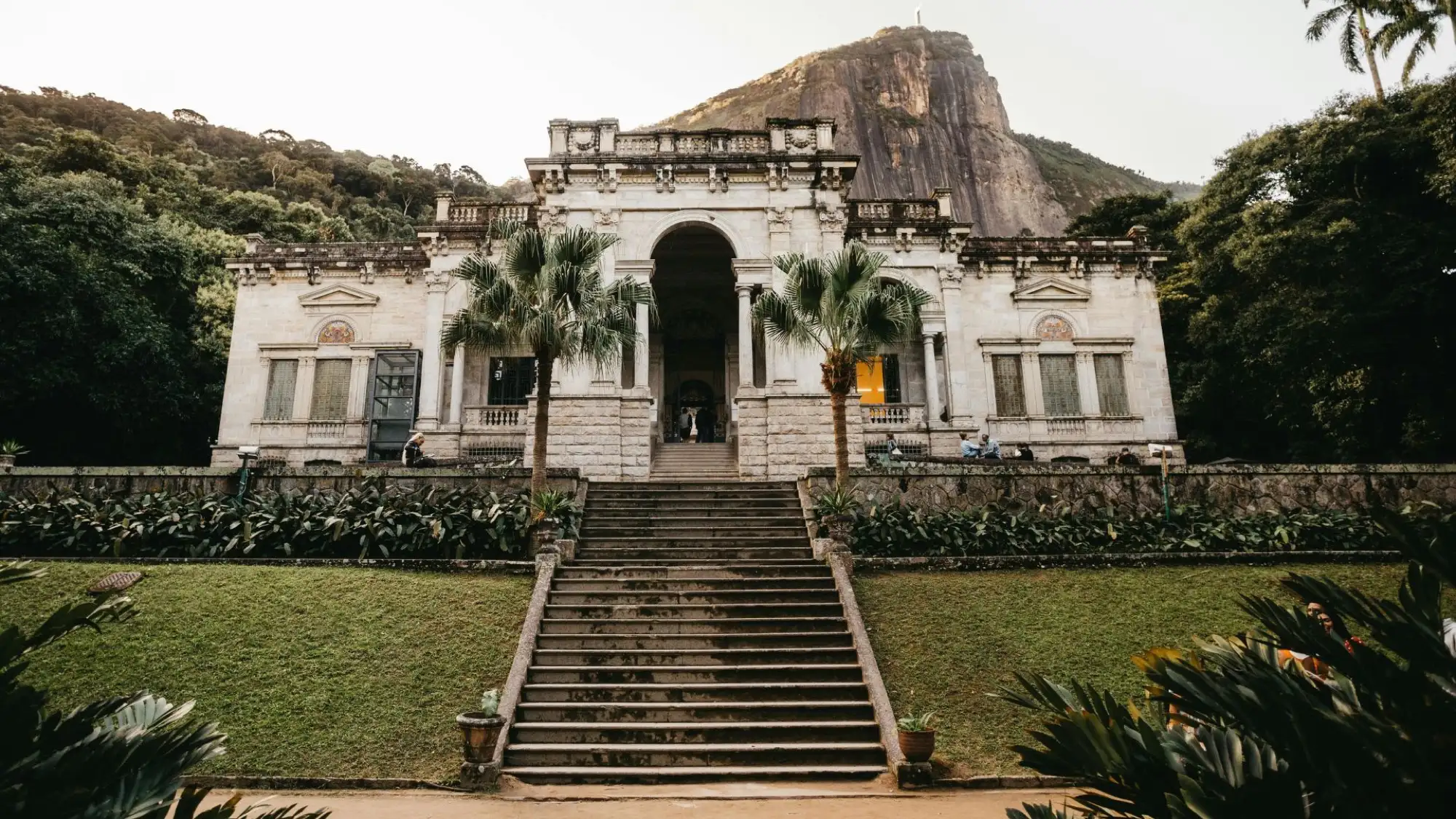
Parque Lage
The park at the foot of Corcovado, and the start of the long trail to the statue.
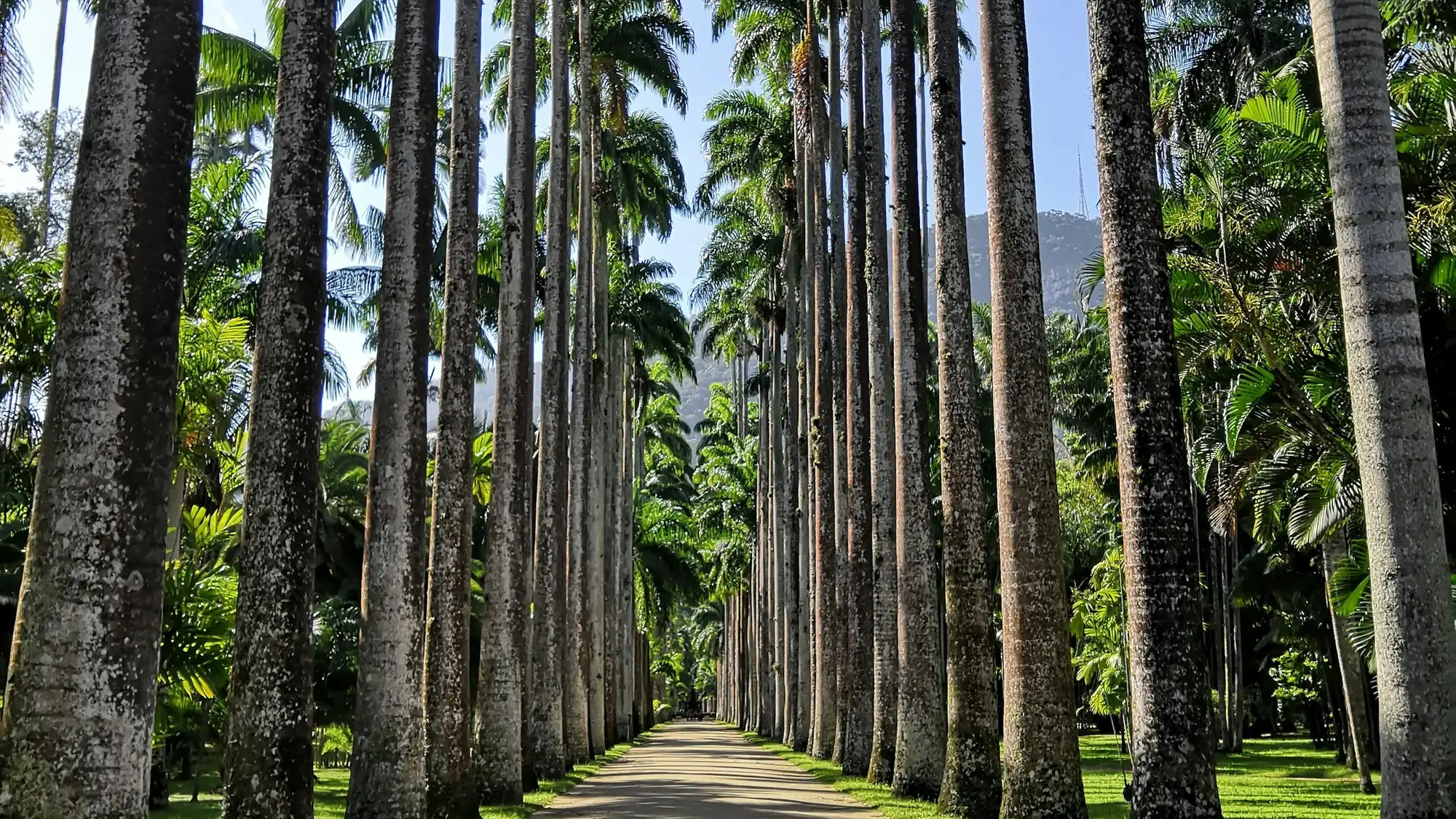
Jardim Botânico
Rio’s botanical garden, on the flat ground below the mountain. An easy second half of the day.
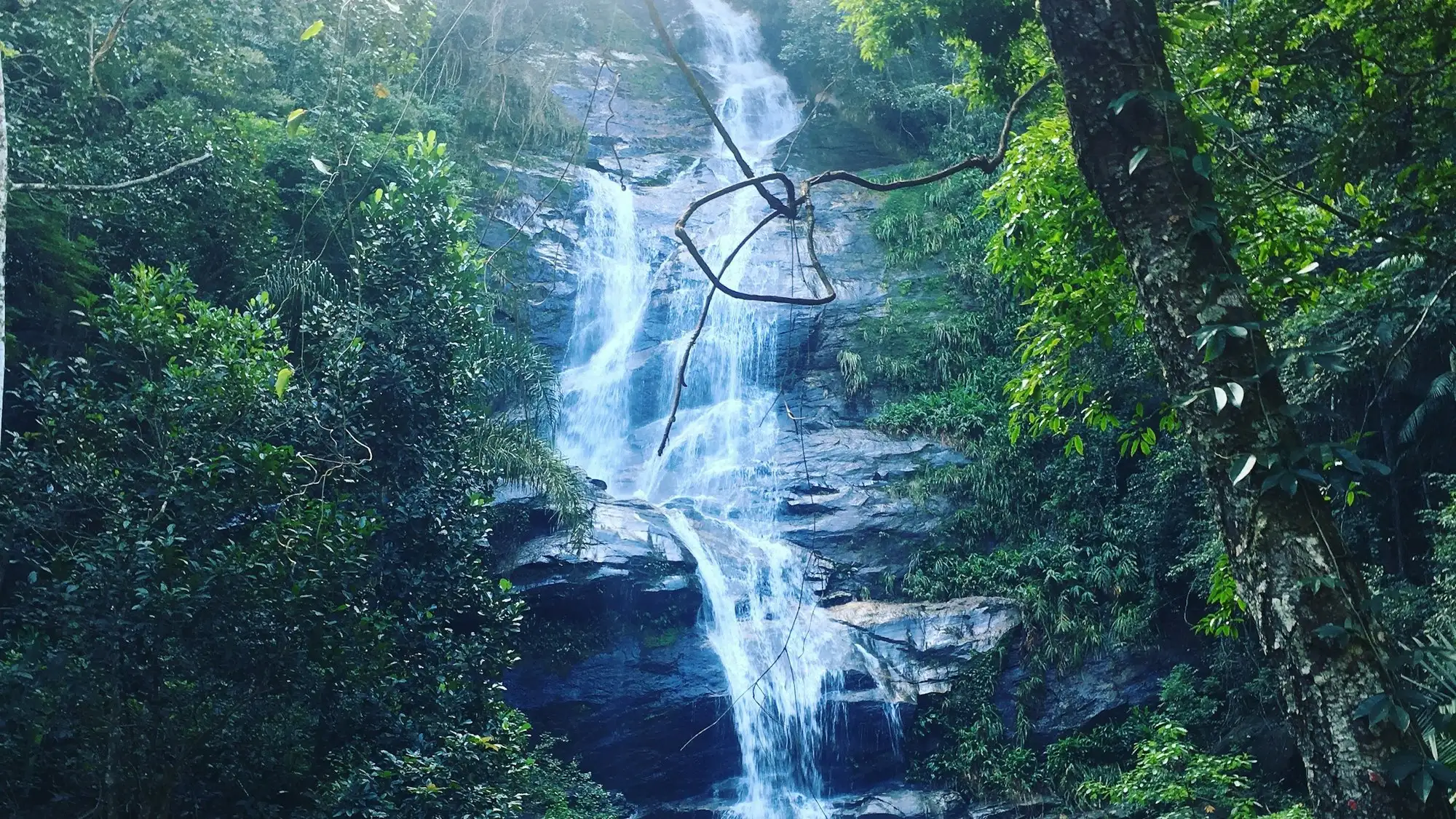
Tijuca National Park
The forest the train and the vans climb through, with waterfalls and lookouts of its own.
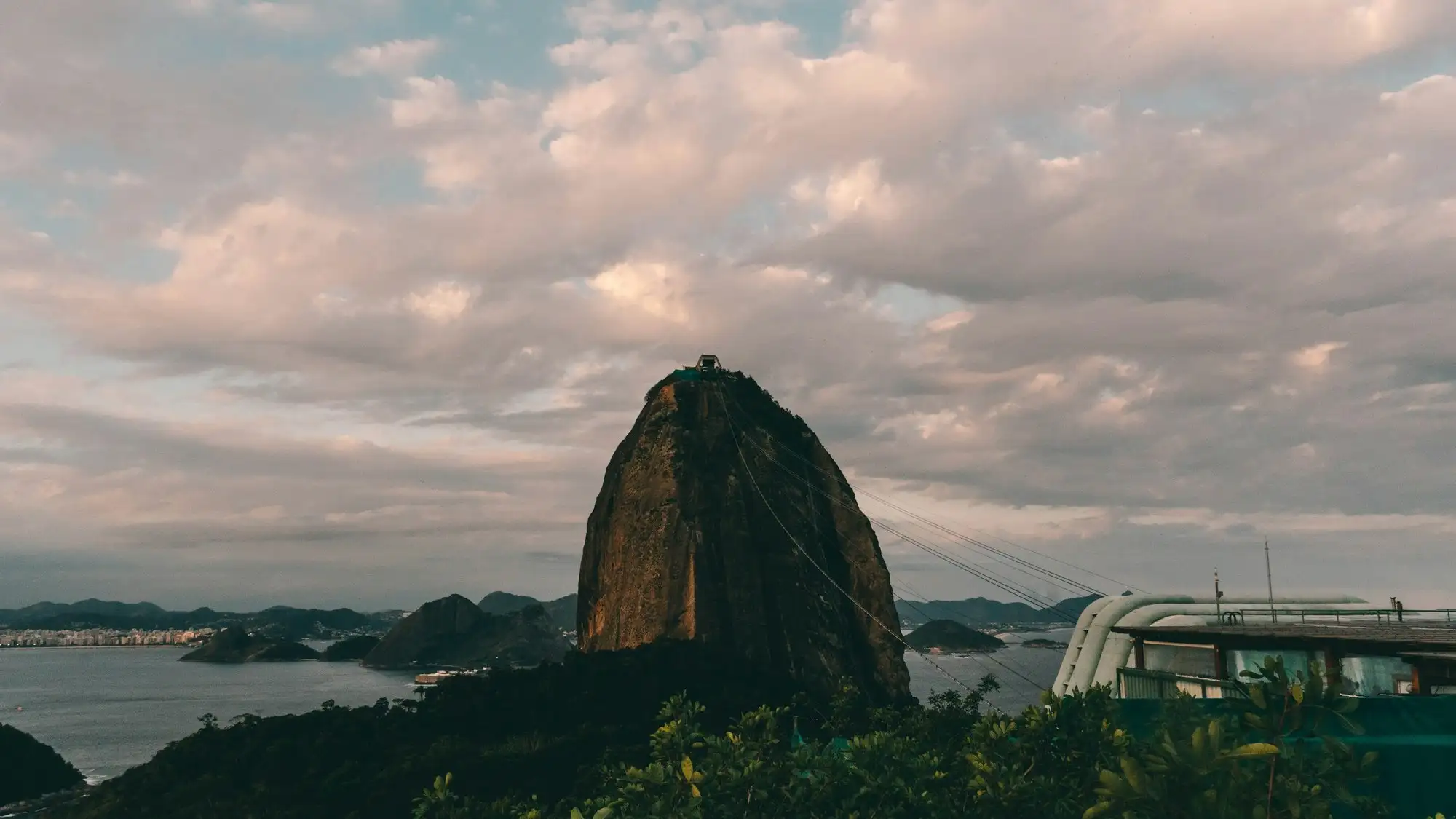
Sugarloaf Mountain
The other great viewpoint, and the one to keep for sunset. Several tours do both in a day.
History
A priest first imagined a monument on Corcovado in 1859, but it took the approach of Brazil’s centenary, a petition signed by more than 20,000 women and five years of building to put one there. The short version:
- 1859
The French priest Pierre-Marie Boss imagines a religious monument on the summit of Corcovado. Nothing comes of it.
- 1884
Emperor Pedro II opens the Corcovado railway, built for sightseers decades before there was a statue to see.
- 1922
A petition of more than 20,000 women asks the president to allow a statue of Christ on the mountain. The foundation stone is laid in the centenary year of independence.
- 1926
Building starts under the engineer Heitor da Silva Costa, with materials and workers going up by train.
- 12 October 1931
The monument is inaugurated on the feast of Our Lady of Aparecida.
- 2006
The monument becomes a sanctuary of the Archdiocese of Rio, and the chapel in the pedestal is consecrated.
- 7 July 2007
Christ the Redeemer is voted one of the New Seven Wonders of the World.
The full story is in our history of Christ the Redeemer. For how it was designed and built, see the architecture, and for the quick answers, Christ the Redeemer facts.