
The hours are simple at the top and fiddly at the bottom. The monument is open from 08:00 to 19:00 every day of the year, but what decides when you can go up is the last departure of the train or van you are using, and those differ.
When to go matters more than when it is open. Corcovado collects cloud, and on the wrong day you ride up into white and ride down again. This page has the hours and the train and van times first, then how to choose your day and your hour.
Opening hours
Christ the Redeemer monument
| Monday | 08:00-19:00 |
| Tuesday | 08:00-19:00 |
| Wednesday | 08:00-19:00 |
| Thursday | 08:00-19:00 |
| Friday | 08:00-19:00 |
| Saturday | 08:00-19:00 |
| Sunday | 08:00-19:00 |
Every day of the year. The first train leaves Cosme Velho at 08:00 and the last at 18:00. Weather and technical faults can change the timetable without notice.
| Way up | First departure | Last departure up |
|---|---|---|
| Corcovado train, Cosme Velho | 08:00, then every 20 minutes | 18:00 |
| Van from Praça do Lido, Copacabana | 07:00 | 16:00 |
| Van from Largo do Machado | 07:00 | 16:00 |
| Van from the Paineiras Visitor Centre | 07:30 | 17:00 (the centre closes at 18:00) |
| Trails from Parque Lage and Paineiras | 08:00 | Last start 15:00 |
Before the first visitors arrive, between 07:30 and 08:00, a priest opens the sanctuary each morning with a blessing.
Best times to visit Christ the Redeemer
The best time to visit Christ the Redeemer is whenever the summit is clear, and that counts for more than the hour or the month. The good news is that you can see the summit before you commit.
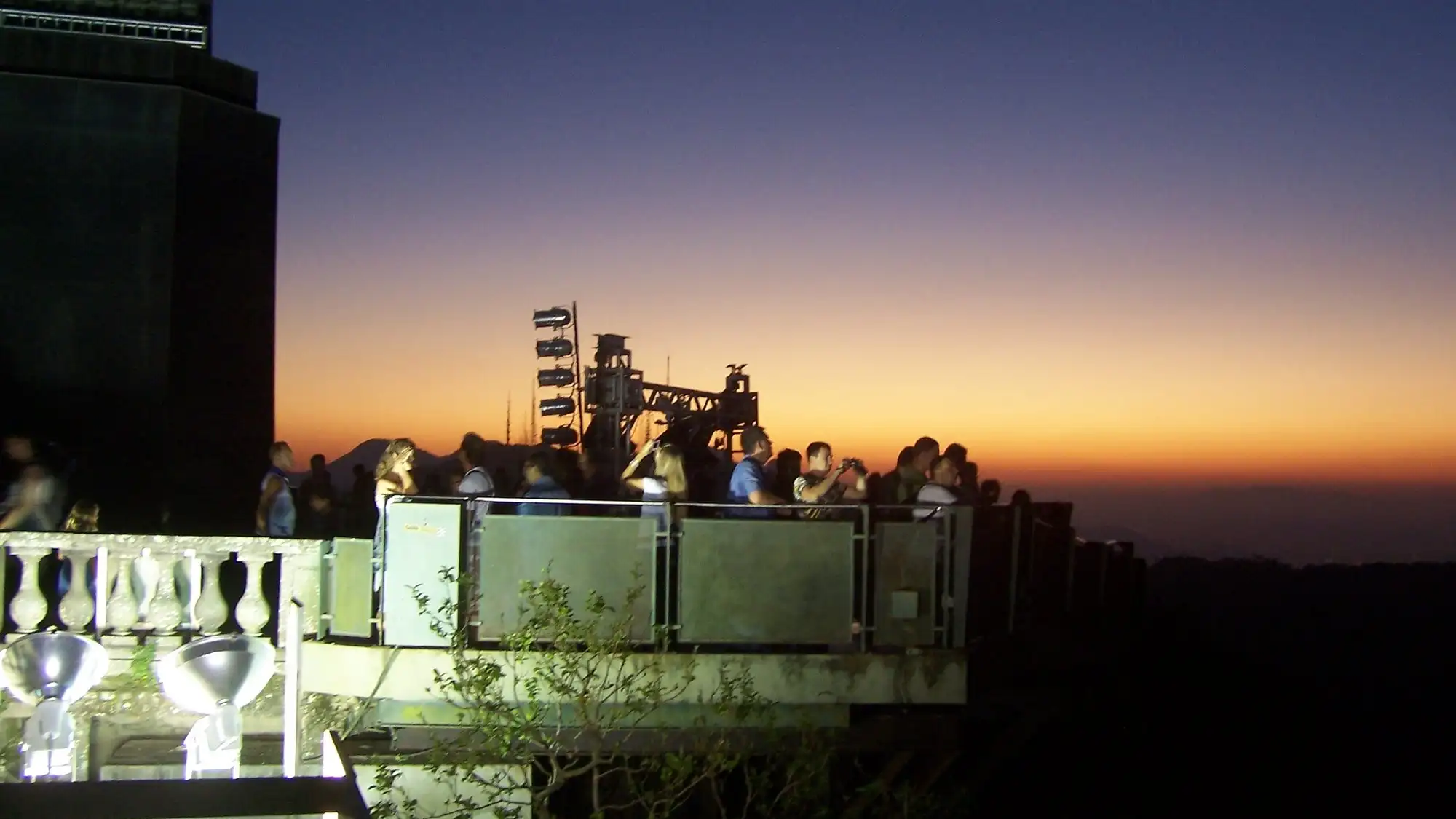
Time of day

Morning is the classic choice, for three reasons. The statue faces east, so until about midday the sun is on its face and chest. The air is cleanest before the day’s haze builds, which matters for picking out the beaches and the bay. And the first trains, from 08:00, run ahead of most tour groups.
Afternoon has a case too, and the van operator makes it, recommending a visit from 14:00, when fewer people are at the top. The sun is then behind the statue and on the view, so Sugarloaf and Guanabara Bay are at their best while the figure itself goes into silhouette. The train ticket’s Golden Hour option, boarding between 15:30 and 18:00, is built for this.
Midday is the one to skip if you can. It has the hardest light, the most heat and the most tour groups.
Day of the week, and the dates to avoid
Weekdays are quieter than weekends, when local visitors join the tourists. The dates to steer round are Brazilian public holidays, Easter week, and the stretch from Christmas through New Year to Carnival, when Rio is full and every boarding time is taken early.
If those are your only dates, book the first train of the morning as soon as your trip is fixed. It is the slot least affected by whatever else is happening in the city.
Season
Rio’s winter, from June to September, is the best bet. Temperatures are mild and it is, in general, the drier half of the year. It is not a guarantee. Cold fronts move up the coast in autumn and winter and can change the weather from one day to the next, so keep a spare day in hand.
Summer, from December to March, is hotter and brings the heaviest showers. The mountains catch more rain than the beaches do, because they stand in the way of damp wind off the Atlantic, and the district at the foot of Corcovado is the wettest in the city. In summer, go up early and have a second date in reserve.
How to pick a clear day at Christ the Redeemer
Book the morning you want, on the ticket you can cancel
The train ticket can be cancelled free until 24 hours before. Book it for the first clear-looking morning of your trip, not the last, so there is room to move it. The options are on our tickets page.
Look at the forecast the evening before the deadline
If the next day looks wet or heavily overcast, move the booking while it is still free to do so.
Check the camera at the time you would leave
The beach can be sunny while the summit is in cloud, and the reverse happens too. What the mountain looks like at dawn tells you little about ten o’clock, so look at the live stream when you are ready to go, not when you wake up.
At the top in cloud? Wait
Cloud on the summit moves quickly. People who stay half an hour often get their clear minute, and the statue appearing out of the mist is a better photograph than the one everybody else has.
How long to spend at Christ the Redeemer
At the top, 1 to 2 hours
Long enough to walk every terrace, look at the statue properly, see the chapel and wait out one passing cloud.
By train, about 4 hours
Getting to Cosme Velho, checking in 40 minutes early, 20 minutes each way on the railway, your time at the top, and a queue for the ride down.
By van from Copacabana, about 3 hours
How the van ticket is sold, including the stop at the Paineiras Visitor Centre. Stay longer at the top if you like, and take a later van down.
On foot, most of a day
Up to four hours of climbing from Parque Lage before you reach the ticket office at the top, then the visit, then the way down.
Insider tips
The last train up is not the one to catch
The 18:00 departure exists, but it leaves you racing the closing time. Aim to be on a train by 17:00 at the latest.
Build the check-in into your morning
An 08:00 train means being at Cosme Velho at 07:20, and Cosme Velho is not on the metro. Work backwards from that before you decide an early slot is for you.
Keep Sugarloaf as your swap
Sugarloaf is far lower than Corcovado and sits out in the bay, so the two do not always share their weather. If the statue is hidden, do Sugarloaf that day and the statue the next. Holding both on cancellable tickets makes the swap painless.
Time your visit around mass, one way or the other
At 11:00 and 15:00 (14:00 on Sundays) mass is said in the chapel or, in good weather, out on the esplanade in front of the statue, which is also where most photographs are taken. If you would like to attend, those are your times. If you want the esplanade clear, arrive after it has finished.
Half the usual crowd
The cap on numbers during the escalator works, scheduled to run until the end of May 2027, means the terraces hold half the people they used to. The cost is on the way in: fewer tickets, and steps where the escalators were.