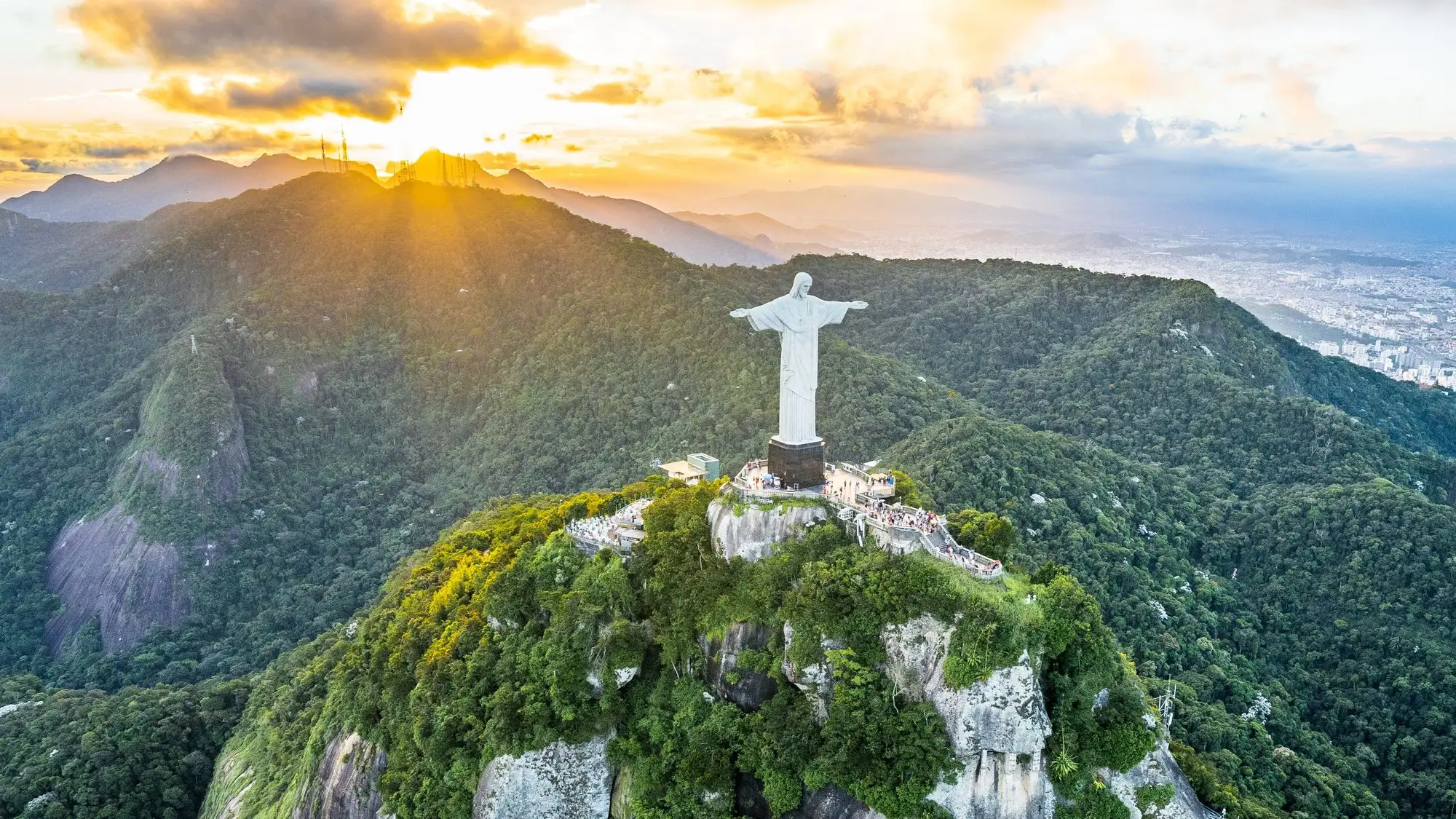
The short answers, for anyone settling an argument or planning a visit. Where a fact has a longer story, we link to the page that tells it.
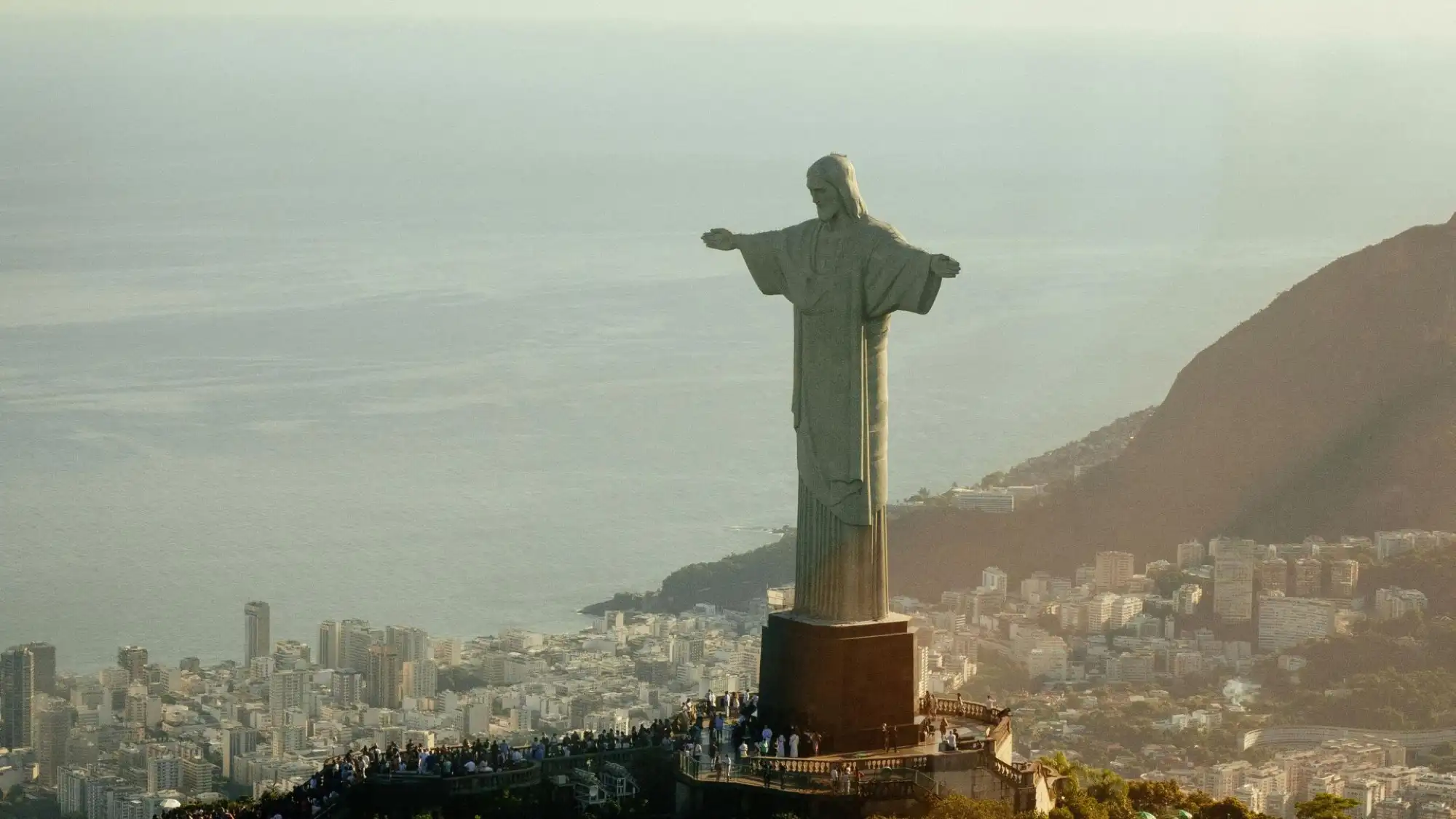
Christ the Redeemer in numbers
- Statue
- 30 metres tall
- With its pedestal
- 38 metres
- Arm span
- 28 metres
- Summit of Corcovado
- 710 metres
- Built
- 1926 to 1931
- Railway opened
- 1884
How big is Christ the Redeemer?
- It is 30 metres tall, on a pedestal of 8 metres. Together they match a 13-storey building.
- The arms span 28 metres, nearly as much as the figure is tall.
- The head alone weighs 30 tonnes.
- It is made of reinforced concrete covered in a mosaic of thousands of triangular soapstone tiles, each fixed by hand.
- It is the largest Art Deco sculpture in the world.
- It is hollow. Inside are twelve levels joined by stairs, leading to openings in the arms and the head. Visitors cannot go in.
- It has a heart. A stylised Sacred Heart, 1.30 metres tall, sits inside the chest, and it is the only interior surface finished in soapstone.
- It was designed for winds of 250 kilometres an hour.
- Lightning strikes it three to five times in a typical year, according to Brazil’s space research institute. In January 2014 a strike broke a piece off the right thumb.
- It faces east, towards Sugarloaf and the mouth of Guanabara Bay, which is why the morning sun lights its face.
More on all of this: the architecture of Christ the Redeemer.
Who built Christ the Redeemer, and when?
- The idea dates from 1859, when a French priest, Pierre-Marie Boss, imagined a monument on the summit. It took another sixty years to be taken up.
- A petition of more than 20,000 women asked the president to allow the statue in 1922.
- The foundation stone was laid in 1922, the centenary year of Brazil’s independence, before a design had been chosen.
- The first design was different. It showed Christ holding a cross in one hand and a globe in the other.
- A Brazilian engineer, Heitor da Silva Costa, designed and built it. The artist Carlos Oswald is credited with the open-armed pose, and the French sculptor Paul Landowski with the head and hands.
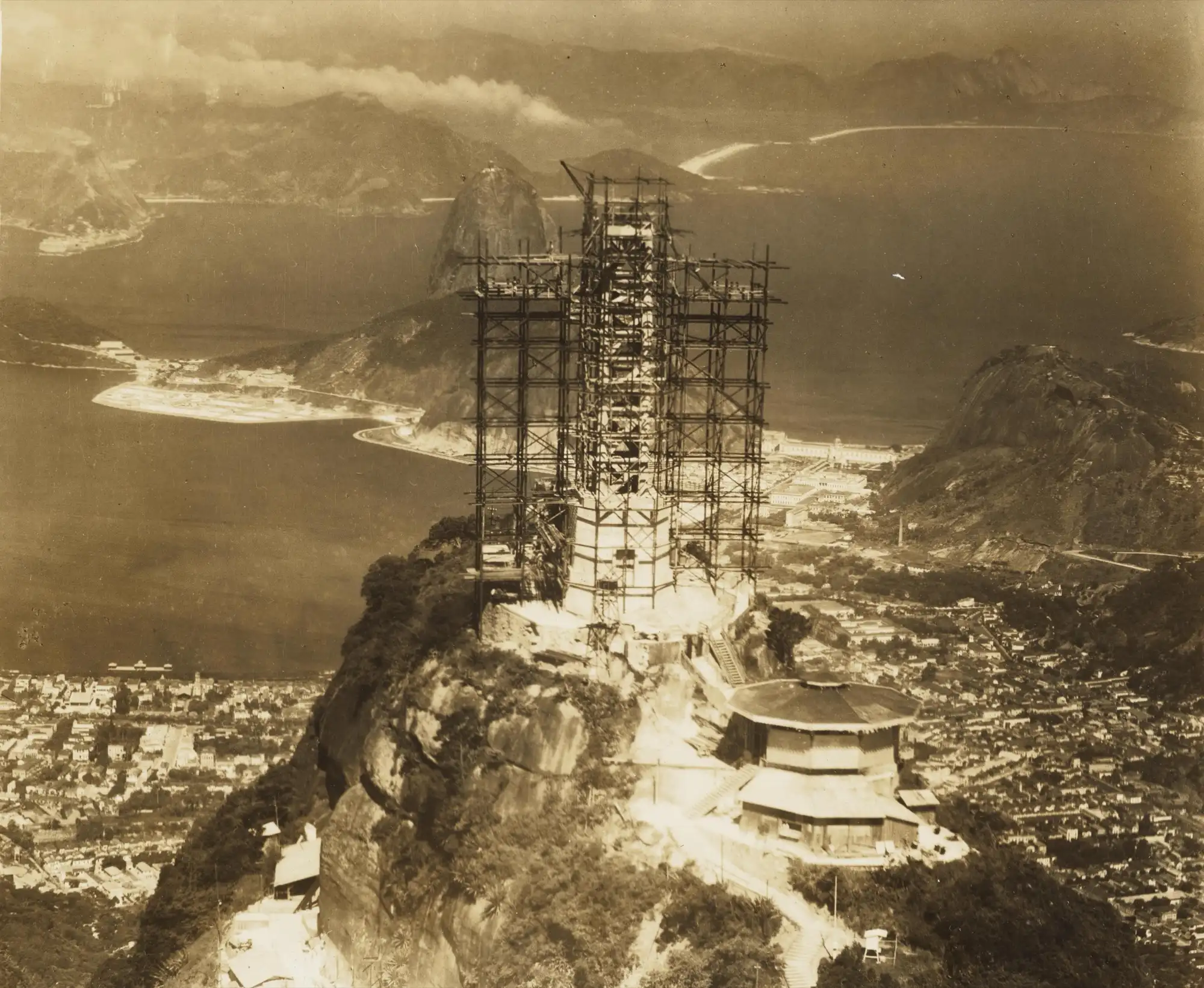
- Building took five years, from 1926 to 1931, and the materials went up by train.
- The master builder lived on the summit for all five years. Heitor Levy ran the site from the pedestal itself, which served as his office.
- Brazilians paid for it through public donations. It was not a gift from France or anyone else.
- It was inaugurated on 12 October 1931, the feast of Our Lady of Aparecida, patron saint of Brazil.
- Pope John Paul II came up on 2 July 1980, and the statue was cleaned for the occasion.
- It became a sanctuary in 2006, on its 75th anniversary, when the chapel in the pedestal was consecrated.
The full account: the history of Christ the Redeemer.
Facts about visiting Christ the Redeemer
- Nobody drives to it. You go up by rack railway, by the national park’s official vans, or on foot.
- The railway is 47 years older than the statue. It opened in 1884 and became Brazil’s first electrified line in 1910.
- The railway built the statue. For four years its trains carried the pieces and the workers to the summit.
- There are 220 steps between the train platform and the statue. Lifts cover part of the way, and the escalators that cover the rest are being replaced until the end of May 2027.
- Before 2002 there were no lifts or escalators at all, and every visitor finished on foot.
- It is open every day of the year, from 08:00 to 19:00.
- Mass is said at the top every day, at 11:00 and again in the afternoon.
- Drones are banned during visiting hours.
- Walking up is free. The trails cost nothing, and walkers pay for the monument at a ticket office on the summit.